
Recycling a battery means destroying it. The pack is shredded, and the lithium, nickel and cobalt are recovered as raw material to be turned into something else. It is a necessary industry and every battery ends there eventually. But it is the end of the object.
Second-life is the step before that. An EV battery is retired from a car long before its cells are finished, because a car needs a level of range and power that a building simply does not. What is no longer enough to move a vehicle at motorway speed is still a great deal of usable storage sitting still on a concrete slab.
What has to be true first
A retired pack is not a product. It is an unknown. Every battery we take in is tested, certified and optimised before it is integrated, and that step is the whole business: it is what separates a storage system from a pile of used cells with a hopeful label on it.
That is also why we are careful with the word. A second-life battery has been requalified. A used battery has not. The difference is a test bench and a certificate, and a buyer is entitled to ask which one they are being sold.
Recycling recovers the material. Second-life uses the object.
Why it matters to the person paying
Two reasons, and the second is usually the one that decides it. The first is carbon: a cell that keeps working does not need to be manufactured again, and the emissions of making it have already been spent. The second is cost. Storage built this way starts from an asset that has already paid for its own production, and that shows up in what a kilowatt-hour of capacity costs to install.
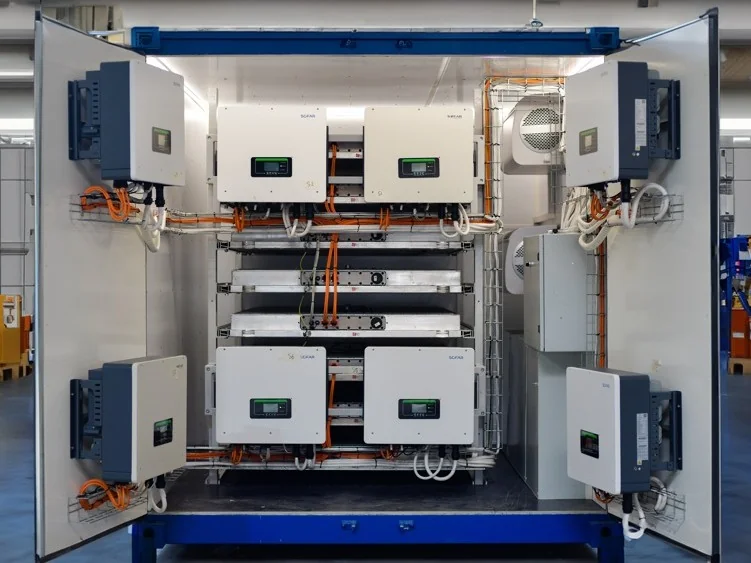
Both of our formats are built the same way, from the same certified cells: the Battery-Shelter, a modular 10-foot container for a fixed site, and a van-mounted mobile unit for everywhere there is no site to fix anything to.